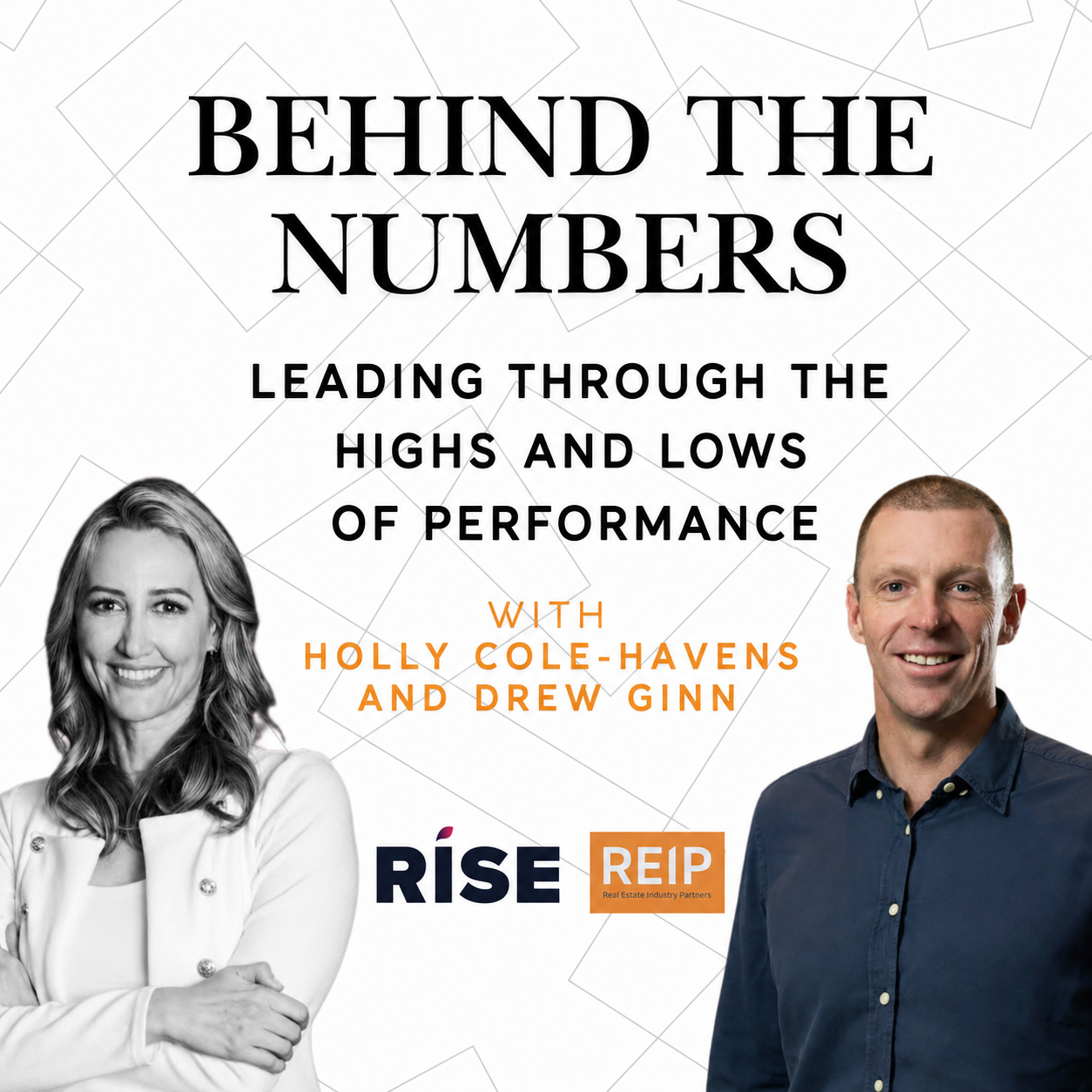
Before we ask people to perform better, we need to understand their capacity

For years, our approach to motivation at work has been fairly predictable.

Set a target. Create an incentive. Reward the behaviour. Expect the result.

Speaking at the Business of Real Estate conference, Holly Cole Havens admitted that 25 years ago, working in investment banking and tasked with increasing sales, that was largely how she thought about motivation too.

Today, neuroscience gives us a much more complex picture.

And one of Holly’s most important messages for leaders was this: when someone is struggling with motivation, telling them to try harder may be addressing the wrong problem.

Our brains are constantly making calculations.

Am I safe? Is the reward worth the effort? How much energy will this require? What happened the last time I tried?

And all of those calculations are being made in an environment that is placing extraordinary demands on our attention and nervous systems.

We have experienced difficult property markets before. What is different today is the combination of financial pressure, AI uncertainty, information overload, social media, constant notifications and a device in our pocket offering stimulation every few seconds.

So before we ask why someone isn't performing, perhaps we should ask a different question:

Do they have the capacity to perform?

Understanding our window of tolerance

One of the most useful concepts Holly shared was the window of tolerance.

It is the zone in which our nervous system has enough capacity to deal with pressure while still allowing us to think, respond and make good decisions.

When our window is healthy, we can handle the difficult client, the lost listing, the frustrating conversation or the bad day without it completely derailing us.

But sustained stress can narrow that window.

We can become anxious, angry, overwhelmed or impulsive. Or we can move in the other direction and become flat, withdrawn and disengaged.

And sometimes what a leader interprets as a poor attitude or lack of motivation may actually be someone operating outside their window of tolerance.

That doesn't remove personal responsibility. But it should change the conversation.

You cannot sustainably outperform poor physiology

Holly described leaders as corporate athletes, and I think there is something powerful in that comparison.

Athletes understand that sleep, nutrition, movement and recovery are part of performance.

In business, we have somehow separated the two.

We celebrate being always available, responding late at night, eating lunch at the desk and pushing through exhaustion. In real estate particularly, urgency can almost become part of our professional identity.

But poor sleep, sustained stress, little movement and constant stimulation can shrink our capacity to deal with pressure.

On the other hand, recovery, social connection, movement, positive inputs and simply stepping away from our screens can help expand it.

You can push through occasionally. We all do.

But you cannot build sustainable performance on permanent depletion.

Sometimes action comes before motivation

Holly also challenged the way we think about procrastination.

When someone isn't taking action, our instinct can be to assume they aren't motivated enough.

But a task may feel too difficult, ambiguous, unrewarding or threatening.

Consider an agent who spent years in a strong market and is now expected to make 25 prospecting calls and potentially hear "no" 20 times.

Their brain is learning from that experience and asking: is the effort worth the reward?

Instead of immediately asking, "Why aren't they doing it?", a better leadership question might be:

What is getting in the way of the first action?

Sometimes the answer is capability. Sometimes confidence. Sometimes clarity. And sometimes the task simply needs to become smaller.

Because we don't always need to feel motivated before we act.

Often, taking action is what begins to create motivation.

We move on from progress too quickly

The final part of Holly's message particularly resonated with me.

We are very good at moving on.

Win the listing. What's next?

Hit the target. Now let's talk about next month.

Holly argues that we need to spend longer noticing what worked, recognising improvement and reinforcing progress.

That might be as simple as saying to someone:

"I heard how you handled that call. You did that really well."

Twenty seconds from a leader can reinforce confidence, behaviour and belonging.

And particularly in more challenging markets, we need to get better at recognising progress, not only celebrating the final result.

Holly brought the whole idea together in three words:

Regulate. Move. Prove.

Regulate the nervous system to create capacity.

Move through purposeful action rather than waiting for motivation to arrive.

Prove progress by reflecting, learning and recognising what is working.

For me, there is an important leadership lesson in that framework.

We cannot manufacture motivation for another person. Individuals have responsibility for their own state and behaviour.

But leaders have enormous influence over the conditions in which people work. We shape clarity, autonomy, recognition, psychological safety and the level of urgency that becomes normal.

So the next time someone appears to have lost motivation, perhaps the first question shouldn't be, "How do I get more out of them?"

It might be:

"What is getting in the way of them being at their best?"

Podcast with Holly Holly's Podcast

What the week taught us about sustainable performance

After several days at the Business of Real Estate conference, one message stood above the rest: sustainable performance is rarely built in the big moment.

It is built in the daily habits most people never see.

The preparation before the meeting. The difficult conversation held before a problem becomes a crisis. The discipline to keep doing the basics when something new and shiny is calling your name.

Across the conference, we heard from Olympic athletes, business leaders, neuroscientists and real estate operators. Their backgrounds were different, but their lessons kept returning to the same ideas: clarity, relationships, rhythm and energy.

Make the main thing the main thing

Darren Shand spent more than a decade managing the All Blacks during one of the most successful periods in international sport.

His message was simple: make the main thing the main thing.

Businesses can easily become consumed by meetings, reporting, technology, recruitment and the latest emergency. Activity grows, but clarity shrinks.

Darren’s framework of Clarity, Intensity and Accuracy is a useful leadership discipline. People need to understand what matters, bring the energy required to pursue it and have the capability to execute it well.

He also spoke about relationship capital. The trust built over time becomes invaluable when the pressure arrives.

You cannot wait for the difficult moment to start building trust. By then, you are trying to withdraw from an account you may never have deposited into.

Growth needs rhythm

Several speakers reminded us that ambition alone does not create scale.

Peter Rowland shared the story of Foxtons growing from one office to 23 through clear standards, distinctive marketing and disciplined measurement.

Natalie South showed what that discipline looks like in a growing property-management business. Behind Housemark’s results are daily calls, tracked referrals, defined roles and a consistent operating rhythm.

None of these practices would make a dramatic conference headline on its own. Together, they create momentum.

Growth exposes what already exists inside a business. If expectations are unclear, growth creates more confusion. If the operating model is strong, growth gives it reach.

The question is not simply whether we are ready to grow. It is whether our people, systems and leadership are ready for what growth will ask of them.

Understand what drives people

Holly Cole-Havens brought a neuroscience lens to motivation.

Our attention, energy and willpower are limited resources. Yet modern work often asks people to spend them on notifications, manufactured urgency and a steady stream of small decisions.

By the time we ask someone to solve a complex problem or have an important conversation, their mental fuel tank may already be blinking red.

For leaders, this requires curiosity.

When someone’s behaviour changes, we can quickly label them as disengaged or resistant. Holly challenged us to ask what might be sitting underneath that behaviour.

It could be overwhelm, uncertainty, exhaustion or anxiety. That does not mean lowering standards. It means understanding what may be preventing someone from meeting them.

Performance is a team outcome

Drew Ginn OAM brought the lessons of Olympic rowing into business.

In rowing, individual strength matters, but it must be connected to timing, trust and shared purpose. One person can be technically brilliant and still disrupt the performance of the boat.

Business is not so different.

Drew spoke about knowing when people need to be pushed and when they need to be supported. Push constantly and people eventually break or withdraw. Support without expectation and standards begin to slide.

Good leaders learn to read the moment, understand the person and respond with intention.

The lesson I am taking with me

The conference offered plenty of ideas, models and impressive numbers. But the lesson I am taking into the next week is a very human one.

Performance is an environment before it becomes an outcome.

It comes from creating clarity, building trust, managing energy and giving people the structure they need to do good work.

Leadership is not something we save for the biggest moments. It is present in what we measure, what we tolerate, what we repeat and where we place our attention.

The conference may be over, but this is where the real work begins.

What will we take back into our businesses, and what will we do differently?

Stop Fixing People: What If the System Is the Problem?

When something isn’t working in an organisation, our instinct is often to look at the people.

Do they need more training? Better leadership skills? More accountability? Greater confidence? A different mindset?

But what if the people aren’t always the problem?

In my recent Future Fit Leadership conversation with engineer, entrepreneur and author Felicity Furey, we explored a different way of looking at organisational performance: examine the system before trying to fix the individual.

It is an idea that comes naturally to an engineer.

Engineers understand that systems influence outcomes. Change part of the system and you can change the behaviour it produces.

Felicity shared a fascinating example from research into performance ratings in male-dominated industries.

Men were more likely to receive a rating of 10 out of 10, while women were more likely to receive 8 out of 10. Importantly, Felicity explained that the bias was not simply men rating women differently. Women were also rating women in the same way.

The researchers changed one thing.

Instead of rating people out of 10, they changed the scale to six.

The bias disappeared.

Felicity’s explanation was that an unfamiliar scale interrupted the mental shortcut. Instead of automatically reaching for a familiar score, people had to stop and think about their assessment.

No additional unconscious bias training. No attempt to make women more confident. No instruction telling people to think differently.

They changed the system.

The systems we rarely question

That example raises an important question for leaders.

How many outcomes inside our organisations are influenced by systems we have stopped noticing?

Performance reviews. Promotion criteria. Meeting structures. Recruitment processes. Communication rhythms. Reporting lines. Targets. Incentives. Even who needs to approve a relatively simple decision.

Felicity spoke about working on a small desktop review for a mine that needed approval from an American headquarters. She recalled spending more time trying to get the project approved than actually delivering the work.

The system made sense at an organisational level. But at an individual level, it created unnecessary friction.

This is where leadership needs to become more curious.

When someone is struggling to perform, we can ask what they need to do differently.

But we should also ask:

What is it about the environment we have created that may be making it harder for this person to succeed?

Culture lives in the small things

We also tend to talk about culture as though it is something abstract.

Felicity takes a much more practical view.

When she looks at an organisation, she looks at its rhythms. Do teams meet regularly? Are one-on-ones actually happening? Do people check in with each other? Can a leader take a holiday and trust their team to continue delivering?

She also pays particular attention to middle managers.

They are often caught between delivering the work and leading the people, while senior leaders may be focused on strategy and more junior employees remain enthusiastic about what the organisation is trying to achieve.

And ultimately, she looks at actions.

An organisation can have excellent policies, values and awards, but the everyday behaviour of its people tells you far more about the culture they are actually experiencing.

That is an important distinction.

Culture isn't what we say we value.

It is what our systems repeatedly encourage, reward, tolerate and make possible.

Belonging needs to be designed

Felicity’s own leadership journey makes this particularly relevant.

She went to an all-girls school where the message was that girls could do anything. Then she arrived at university expecting women to represent perhaps 40 per cent of her engineering course.

Instead, it was closer to 10 per cent.

Suddenly she was often the only woman in the class or the room.

She became reluctant to put forward ideas or put her hand up because standing out already felt risky. If she offered a bad idea, she worried she would be pushed further to the outside.

Eventually, she did put her hand up.

That decision led to an event encouraging girls to consider engineering. It sold out within days, a second event was added, and 57 per cent of participating girls changed their response from never having considered engineering to saying they would.

That initiative eventually became a charity that has reached more than 15,000 students.

There is a leadership lesson in that story beyond diversity.

People can have capability that remains invisible because the environment has not made it safe for them to use it.

Felicity described her charity as a “sandpit” where she could experiment without feeling that a boss was looking over her shoulder or that failure would cost her a job.

It gave her permission to discover a different version of herself as a leader.

It makes me wonder how much capability sits unused inside our organisations because people are waiting for the conditions to feel safe enough to try.

Have we designed work around extraction?

Our conversation then moved to something I think leadership needs to grapple with much more seriously.

Most businesses are designed to extract something from people.

We need performance, productivity, growth and profitability. Those things matter. Without them, we don't have sustainable businesses or jobs.

But perhaps there is another side to the equation.

If we are asking people to contribute their time, energy, ideas and capability to our organisations, what are we putting back into them?

Felicity spoke about the difficulty of measuring this because so much of what matters is intangible.

Earlier in her career, her contribution could be measured through drawings produced, reports completed, project profitability and the P&L.

But one of her strengths was building relationships.

That contribution was much harder to put into a spreadsheet.

We have become very good at measuring output.

We are much less sophisticated at measuring the human conditions that make sustainable output possible.

AI makes the human question more important

This becomes even more relevant as AI changes work.

Felicity is not anti-AI. She uses it and sees it as another tool, much like the modelling programs engineers have used for years.

But she has also deliberately stepped back from using it for some of her thinking and writing.

Why?

Because she doesn't want to outsource imagination, curiosity, creativity or judgement.

She also worries about what younger people may miss when technology and flexible work remove some of the informal learning that used to happen simply by being around experienced colleagues.

A graduate might once have overheard a senior person arguing through why one option was better than another. They weren't simply learning the answer. They were learning how someone arrived at it.

That development of judgement is much harder to replicate through an AI-generated response.

As technology becomes better at providing answers, perhaps one of the responsibilities of leadership will be ensuring our people don't lose the ability to think.

From productivity to impact

At the end of our conversation, I asked Felicity to imagine historians looking back at our generation 50 years from now.

What did she hope they would be grateful we had the courage to change?

Her answer was provocative:

“Thank God they stopped worrying about productivity.”

Not because productivity has no value.

Her argument is that our definition of success needs to expand.

She suggested shifting our attention towards impact.

I think there is something powerful in that distinction.

Productivity asks: How much did we produce?

Impact asks: What difference did it make?

What was the impact on the business?

What was the impact on the people who chose to work there?

What was the impact on the customer?

What was the impact on the community?

And what did we leave behind?

That connects directly with Felicity's work around legacy.

She argues that legacy shouldn't suddenly become relevant when a leader reaches the final years of their career. It can be built throughout a career through mentoring, developing others, sharing knowledge and consciously thinking about what we leave for the next generation.

Perhaps that is also where the systems conversation ultimately leads.

Leadership isn't simply about getting better performance from the people we have today.

It is about designing organisations in which people can contribute, grow, belong and do meaningful work, while still delivering the commercial outcomes a business needs.

And sometimes achieving that doesn't require another leadership program, another wellbeing initiative or another attempt to change people's behaviour.

Sometimes we need to look at what we have designed around them.

Because if the same problem keeps appearing across different people, perhaps it is time to stop asking what is wrong with the people.

And start looking at the system.

Listen to podcast here

From Chief Everything Officer to Chief Executive Officer: The Leadership Shift That Makes Growth Possible

From Chief Everything Officer to Chief Executive Officer: The Leadership Shift That Makes Growth Possible

Many CEOs start out as the Chief Everything Officer - across every decision, solving every problem and carrying far more than they should.

But as a business grows, leadership has to change.

In my conversation with leadership coach Kenny Lange, we explore why scaling often requires leaders to let go of the very behaviours that helped them succeed in the first place, and why the question isn't simply what you need to do next, but who you need to become to lead what comes next.

Belonging, Identity and the Multicultural Australia We Have Built

Belonging, Identity and the Multicultural Australia We Have Built

Pauline Hanson used her National Press Club address to argue that Australia should aspire to become a monocultural society.

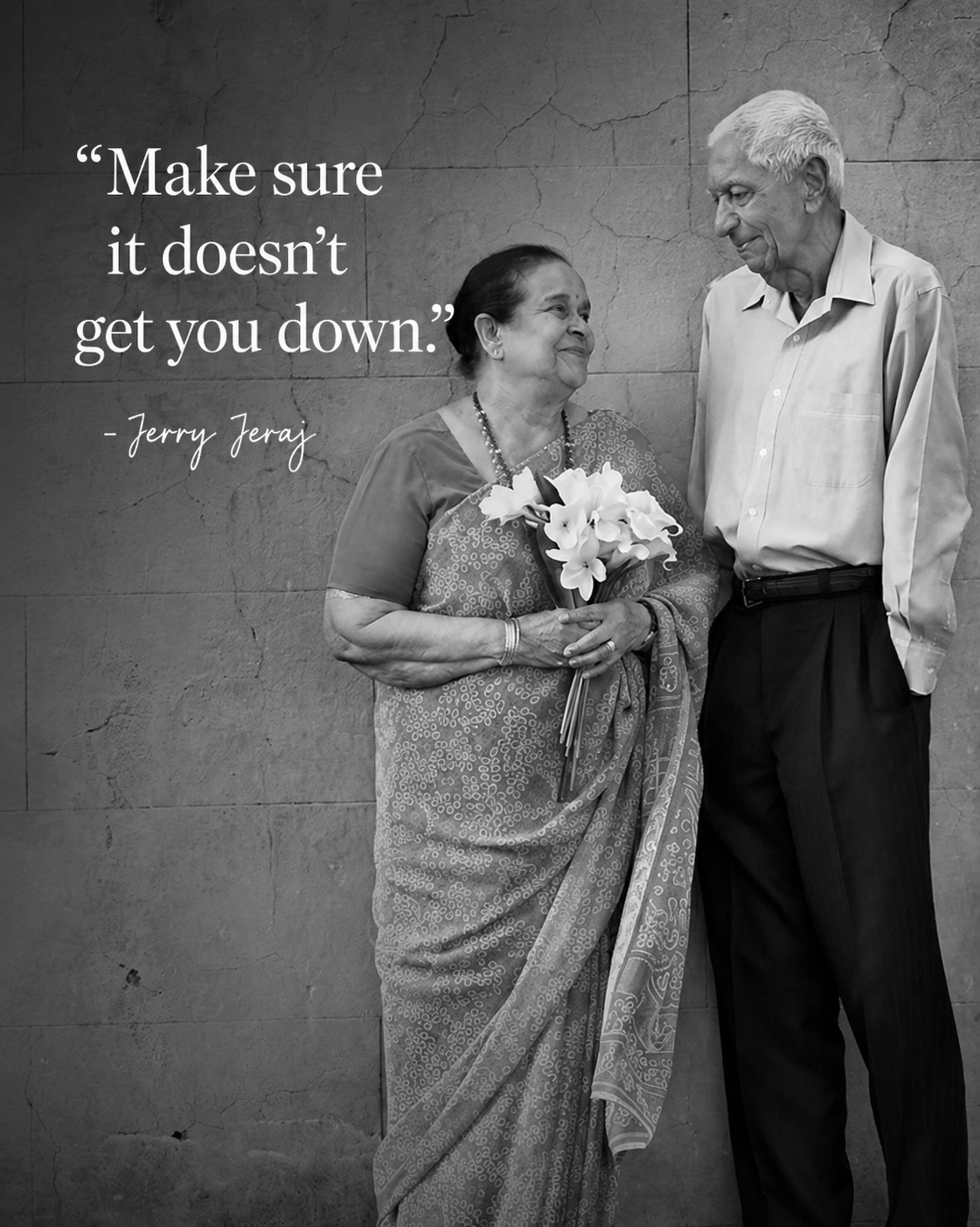
As I listened, I found myself thinking about my parents.

They arrived in Australia during the final years of the White Australia Policy. They came to study, then to work, believing that education, hard work and contribution would allow them to build a future here. My father was an accountant. My mother was a nurse. They spoke two languages fluently, one of them English.

Yet despite everything they contributed, they experienced discrimination that would be difficult for many Australians to imagine today. People moved away from them on public transport. They were served last in shops. Rental properties suddenly became unavailable when landlords realised they were Indian. After eight years of living and working in Australia, their visa application was rejected.

When I ask my father about those experiences, he rarely speaks with bitterness. His advice was always simple.

"Make sure it doesn't get you down."

His words came back to me as I reflected on a larger question: What exactly does a monocultural Australia look like in a country where 51 per cent of people have a migrant background? And perhaps more importantly, what are we really being asked to wind back?

This is a personal reflection on migration, belonging, identity and the Australia my parents hoped for, and the Australia I hope we continue building.